
Start 2026 by Filling Your Creative Well
.
For many people it’s been a long, hard year. Maybe that’s true for the people you work with and maybe it’s true for you. This time of year always seems to pull for a shift towards next year’s goals, but for most of the leaders I work with setting or reaching goals isn’t actually what is hard for them. Instead, what I have seen is way too much exhaustion. One helpful phrase I heard many years ago from the poet David Whyte was that the antidote to exhaustion isn’t rest — it’s wholeheartedness. [1]
Often in my work I have used that phrase to help people find rejuvenation by connecting to their values and their purpose. But sometimes the overwork and exhaustion is actually a result of overuse or overreliance on purpose, which can happen for leaders where trauma is a routine part of the job. So instead, it might be more helpful to focus on the “whole” in wholeheartedness.
When I am working on a piece of writing or creating a new program, I get a folder or three-ring binder and I essentially create a scrapbook or box of ideas. You may use an app or a computer folder, but I find the tangibility of paper and objects helps me. In this stage of creation, I keep everything that sparks my interest or brings me joy, or makes me wonder and know something new or different. I write myself notes or I write in the margins. I draw myself pictures or diagrams. I call this stage of the work “compost” because out of the mess that gets created, something new can grow.
I believe that our creative selves and the parts of ourselves that need healing need these kind of resources. They need a version of this compost pile — a well or underground spring of resources. We often think about resilience in terms of physical or psychological resources, but there may also be a need for the resource of creativity.
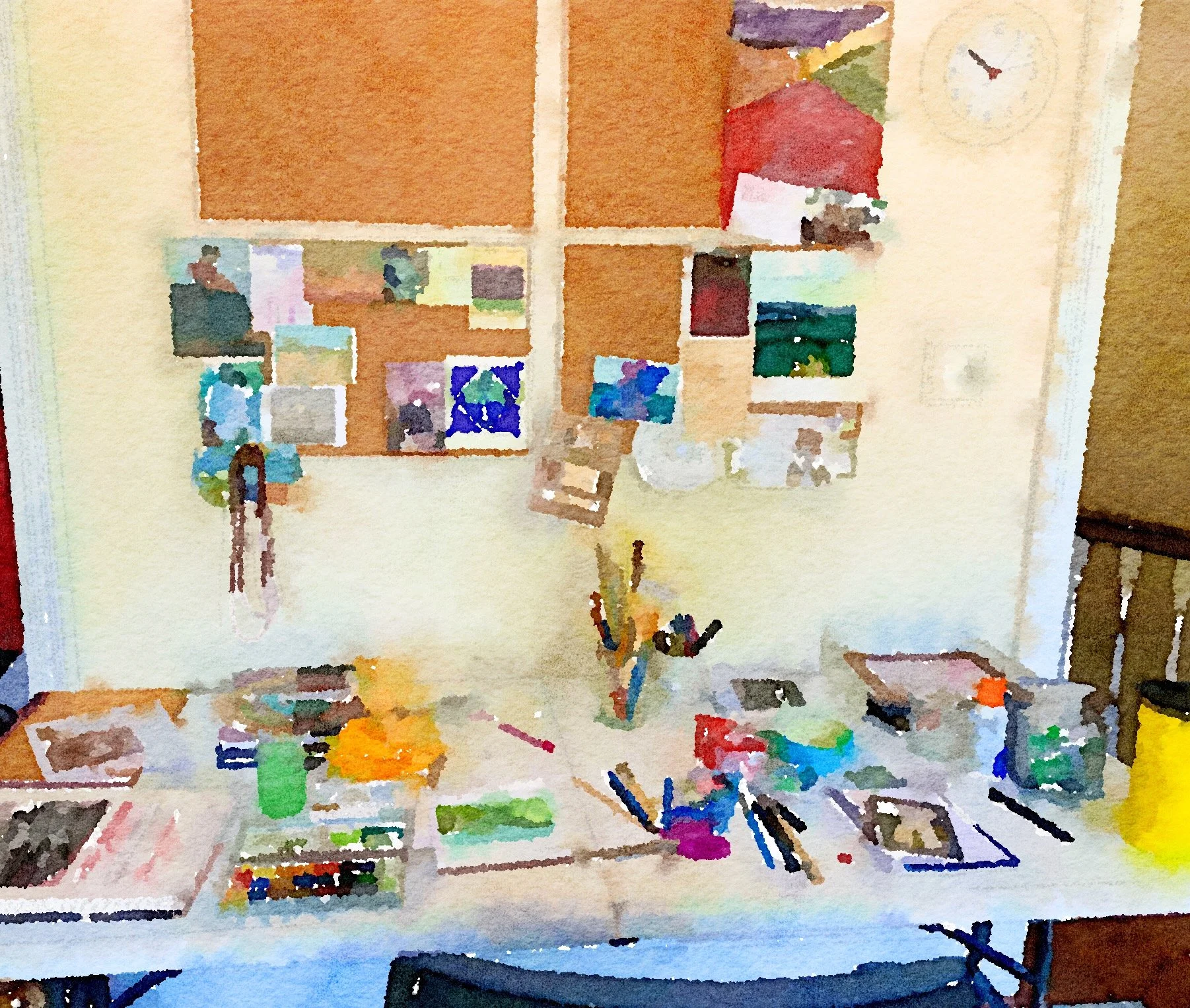
If you have ever had the privilege of going to an artist’s studio, you find yourself surrounded by this well of inspiration — their reserve bank of creativity. Pictures and magazine clippings tacked to the walls or pegboards. Shells or driftwood or stones line the windowsills. They have sculptures and old paintings. Glass bottles that catch the light and color studies with the paints they use. They surround themselves with visual reminders of their well of creativity.
The well can be filled with a broad mixture of input: music, art, patterns, nature, poetry, writing, dance, cooking, gardening, as well as a wide range of input you can find that interests you. Our world of input through screens is so one-dimensional, and despite infinite content, our creative input is shrinking — and in ways we may not yet know, our creative wells are invisibly running dry. We can change that.
But how? First, you need to stop. Sit. Start with stillness. If you need a mug of tea or a blanket to make stillness more comfortable, that’s fine. Sit on your couch or in a chair near a window. Today I chose to stop and look at my Christmas tree for ten minutes. I love looking at the way the lights reflect their sparkle in the small glass ornaments. I love the spaces between the branches and the little views you get to the other side or other ornaments — reminding me that what’s not there can be as powerful as what is. I looked out the window at the sunrise with pink clouds close to the horizon and a thick dark cloud overhead. It looked like the world was wearing a hat.
Once you slow down, add in other activities or experiences to fill your creative well. Look at books of art. Let your mind wander. Listen to music and paint pictures in your mind. Read poetry and find language for an experience in your life. The goal isn’t an outcome that you can see right now. The goal is to give your creative mind — the mind that you rely on for problem-solving, complexity, relationships, and healing — a deep well to pull from when you need to.
Explore and Practice:
1) If you miss having a concrete goal and want to make this work more tangible, set aside a box or a folder to capture the bits and bobs of creativity. Or take photos and create an album just for this purpose.
2) Create a creativity journal and write three things at the end of each day that you found for your creativity well.
3) Immerse yourself in art:
a. The Met
b. Yo-Yo Ma
[1] David Whyte, Crossing the Unknown Sea: Work as a Pilgrimage of Identity, Riverhead Books 2002.